Calculate home loan repayments with our Home Loan Repayment Calculator. View detailed amortization charts, compare loan terms, and plan your mortgage with confidence.
'Calculator results are estimates only and not quotes. Actual quotes will be provided by licensed brokers after you submit an enquiry.'
Home Loan Details:
Important!
Home Loan Interest Rates differ from lender to lender and will depend on your individual circumstances (credit history, employment status, age, etc.). To find out if you qualify ... and for a free, personalised interest rate and repayment quote,
please CLICK HERE
Home Loan Amortisation Calculator
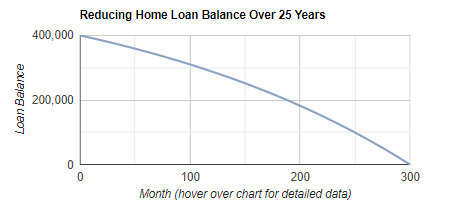
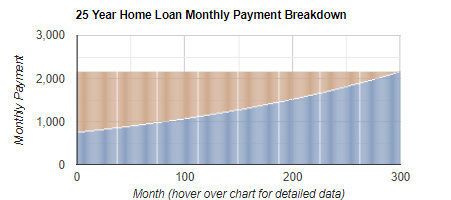
The following amortisation graphs detail month-by-month data on the progress of the proposed loan. The first chart below examines the reducing loan balance over the course of the finance contract term. The second graph illustrates the portion of each monthly repayment allocated to payment of interest vs principal reduction.
How to use our Home Loan Repayment Calculator
Our Home Loan Repayment Calculator helps you estimate your mortgage repayments in Australia and understand how a loan may reduce over time. It is useful for budgeting, comparing loan terms, and visualising an amortisation schedule (how each repayment is split between interest and principal). The calculator is designed for planning only and works best when you enter realistic assumptions.
Important information: Results are estimates only and do not constitute a quote. Interest rates and loan features vary by lender and may change. This information is general and does not take into account your objectives, financial situation or needs. Consider whether it is appropriate for you and seek professional advice if required.
How to complete the calculator fields (in order):
1. Purchase Price: Enter the property purchase price. If you expect to borrow extra for costs, you may choose to include amounts such as stamp duty, insurance, and other buying costs in this figure so your estimate reflects your likely loan size. Enter whole numbers only (no dots or commas).
2. Deposit or Equity Value: Enter your cash deposit or usable equity from another property (if applicable). A higher deposit generally reduces the loan amount and can lower repayments. Enter whole numbers only (no dots or commas).
3. Term of Loan (years): Select the number of years to repay the loan. Longer terms usually reduce repayments but increase total interest paid over the life of the loan.
4. Interest Rate (% per annum): Select an interest rate for the simulation. Use a realistic rate and consider testing higher rates to understand “rate rise” risk.
5. Calculate: Click calculate to generate your results.
How to interpret the results:
1. Repayment estimate: Use this as a starting point for affordability checks, remembering real loans may include fees and different features.
2. Amortisation charts: Review the loan balance chart to see how your balance falls over time, and the interest versus principal chart to understand how early repayments are typically interest-heavy, then shift toward principal reduction later.
3. Compare scenarios: Adjust the term, deposit/equity, or interest rate and recalculate to compare loan terms and see how changes affect repayments and total interest over time.
Interest rate uncertainty is again shaping the home loan conversation for Australian first-home buyers, with recent finance and property market reporting pointing to a cautious mood among borrowers, lenders and sellers. Even where headline price growth has moderated in some areas, the cost of borrowing remains one of the biggest practical hurdles for buyers trying to move from saving a deposit to securing approval. - read more
Australia’s housing market is again showing signs of upward price pressure, with recent property reporting pointing to renewed gains across several capital cities and regional markets. For first-home buyers, the message is not simply that homes are becoming harder to reach. It is that every moving part of the purchase needs to be checked before making an offer. - read more
Australia’s student debt changes are becoming an important finance story for aspiring first-home buyers, especially graduates who have been carefully saving while also carrying a HELP balance. A lower study debt can make the path to a first home buyer home loan feel more achievable, but it is not a simple switch from “not ready” to “approved”. - read more
Recent property and finance reporting has again highlighted pressure on Australian mortgage holders, with higher repayments, insurance costs, council rates and everyday bills leaving some households with less room to move. For first-home buyers, the main lesson is not that buying is out of reach. It is that preparation matters more when lenders and borrowers are both watching affordability closely. - read more
Buying your first home is an exciting and significant milestone in life, especially for young Australians. The journey from dreaming about home ownership to holding those keys can feel both thrilling and daunting. With property prices fluctuating and the market offering numerous opportunities, understanding the dynamics of purchasing a home in today's Australian housing market is crucial. - read more
First home buyer borrowing capacity is based on more than income. Lenders usually look at income, expenses, debts, deposit size, credit history and whether repayments remain affordable if rates or circumstances change. - read more
Buying your first home is a thrilling milestone, filled with anticipation and the promise of a new chapter in your life. For many Australians, it's a dream to own a place they can truly call their own. However, alongside the excitement, comes the reality of navigating the complex property market, which can be daunting for first-time buyers. - read more
Applying for your first home loan can feel complicated, but the process is easier to understand when broken into clear stages: preparation, pre-approval, finding a property, formal approval, loan documents and settlement. - read more
Knowledgebase
Personal Loan: a loan that is granted for personal use, normally unsecured and granted by a lender on the borrower's integrity and capacity to repay